

March 11, 2026
Learn What Restaurant Cost Control Software Actually Does
Restaurant margins are tight, and controlling food and beverage costs requires more than spreadsheets and manual tracking. Modern hospitality operations rely on technology to gain clear visibility into where money is being spent and how operational decisions affect profitability.
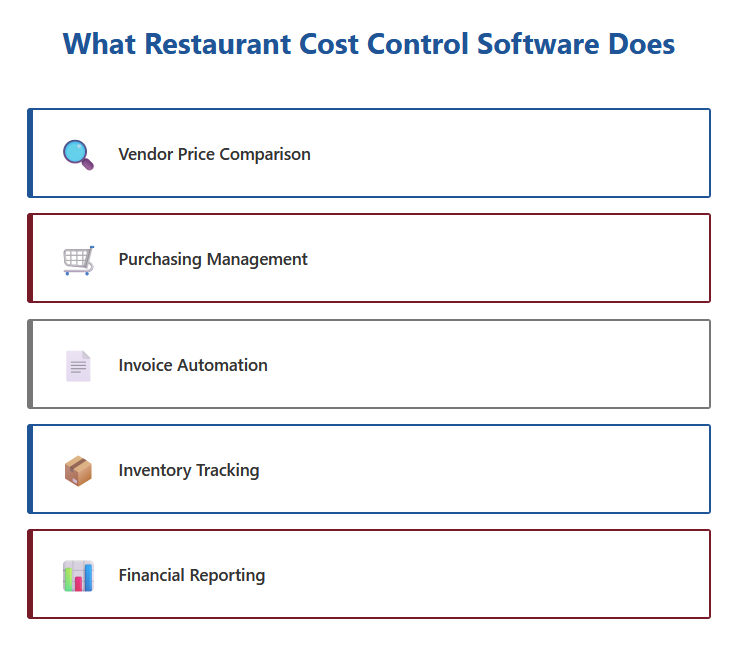
Restaurant cost control software helps operators manage purchasing, vendor pricing, invoices, inventory, and expenses within one connected system. By bringing these workflows together, restaurants gain the financial insight needed to make better decisions and protect margins.
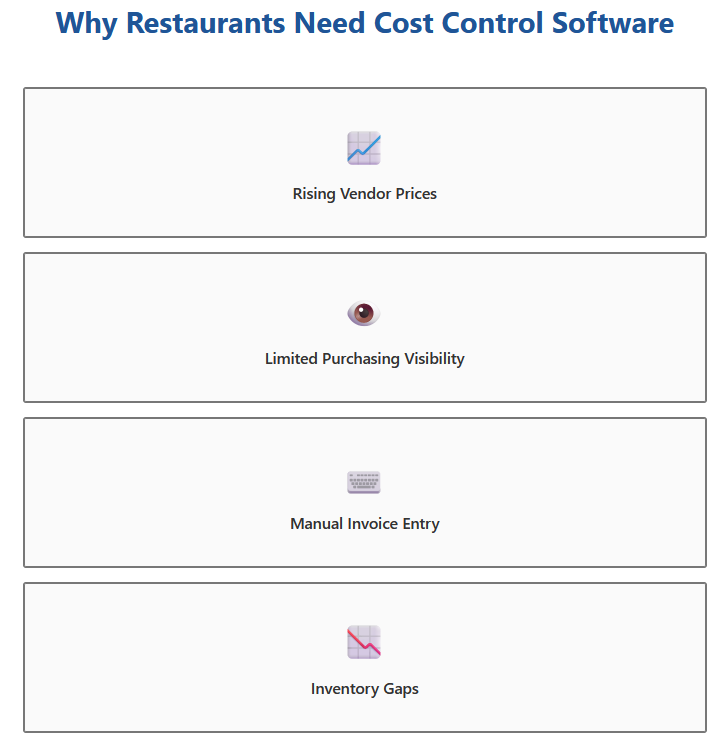
Without a centralized system, many restaurants rely on disconnected tools for ordering, invoices, inventory counts, and accounting. These gaps make it difficult to understand how purchasing decisions affect costs, where spending is increasing, and which areas of the operation need attention.
Restaurant cost control software connects these operational processes so operators gain real-time insight into spending, product usage, and cost trends.
How Cost Control Software Improves Purchasing Visibility
One of the most important functions of restaurant cost control software is improving purchasing visibility.
Most restaurants work with multiple suppliers, and pricing for the same products can vary significantly between vendors. Without a way to compare pricing consistently, operators may unknowingly purchase items at higher costs.
Cost control software allows operators to:
- Compare vendor pricing for identical products
- Review purchasing history and order guides
- Identify cost fluctuations and price increases
- Make informed purchasing decisions before placing orders
With better visibility into vendor pricing, restaurants can reduce food costs and improve purchasing discipline.
How Invoice Automation Reduces Manual Work
Invoice processing is one of the most time-consuming administrative tasks in restaurant operations. Manually entering invoices, coding expenses, and reconciling documents can take hours each week.
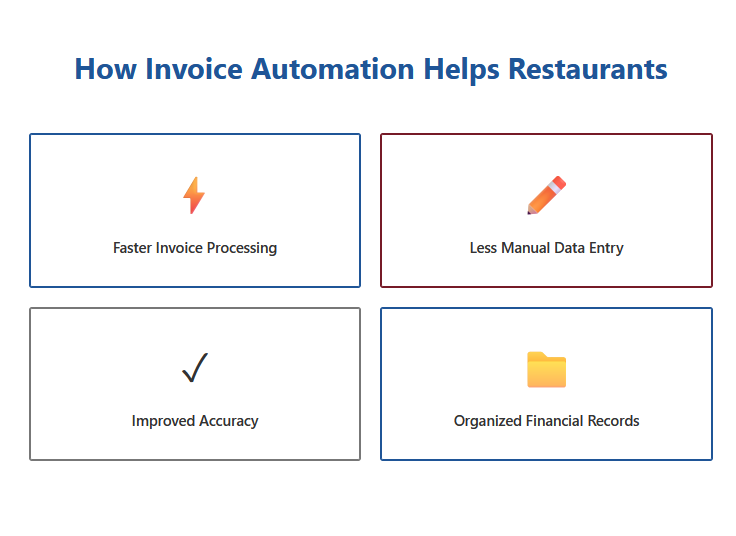
Restaurant cost control software simplifies this process through invoice automation.
Using OCR (optical character recognition) technology, invoices can be scanned and captured automatically. The system extracts key information such as vendor name, product details, quantities, and pricing, allowing invoices to be organized and coded without manual entry.
This automation reduces administrative workload, improves accuracy, and ensures financial records remain consistent and easy to review.
Connecting Inventory, Expenses, and Financial Reporting
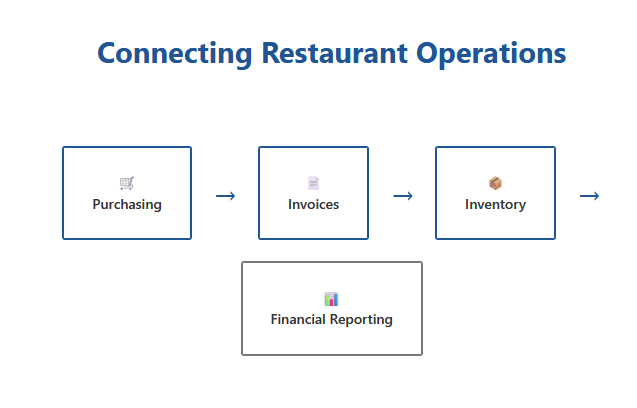
True cost control happens when purchasing, invoices, inventory, and financial reporting work together.
Restaurant cost control software connects these operational workflows so operators can see how purchasing decisions affect inventory levels, usage patterns, and cost of goods sold.
With this level of visibility, restaurants can:
- Track inventory usage and identify discrepancies
- Monitor spending trends across categories
- Understand how purchases impact food and beverage cost
- Improve financial reporting accuracy
When these processes are integrated, operators gain a clearer understanding of where money is going and where adjustments are needed.
Why Restaurant Cost Control Software Matters
Cost control is not just about reducing spending—it’s about gaining the visibility needed to make better operational decisions.
When restaurants rely on disconnected systems, important financial insights are often hidden. A centralized cost control platform provides the transparency required to monitor expenses, evaluate purchasing decisions, and maintain healthy margins.
Key Takeaways
• Centralized visibility into purchasing, invoices, and inventory
• Reduced manual work through invoice automation
• Better vendor price comparison and purchasing decisions
• Improved financial reporting accuracy
• Clear insight into food and beverage costs
Restaurant cost control software gives operators the tools they need to manage costs proactively instead of reacting to problems after they occur.