
November 21, 2025
Learn How to Use Inventory Data to Forecast Orders
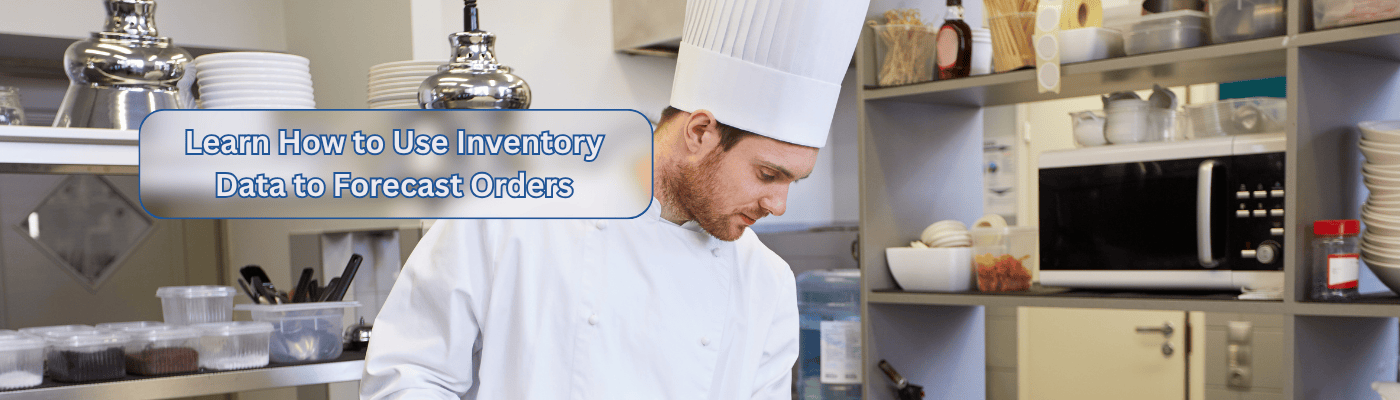
Forecasting is one of the most important — and often overlooked — ways operators protect margins. When your team knows exactly how much product you’ll need for the week ahead, you avoid the two biggest risks in purchasing: over-ordering and running out of stock.
Inventory data, when used correctly, gives restaurants a predictable way to plan purchases based on reality — not guesswork. Rather than reacting to shortages or relying on memory, operators can use historical usage, current stock levels, vendor pricing, and recipe demand to forecast orders with confidence.
Why Forecasting Using Inventory Data Matters
Most ordering problems come from one root cause: not knowing what’s actually being used.
Accurate forecasting gives operators:
-
Fewer emergencies and last-minute orders
-
Lower spoilage and waste
-
Better vendor negotiation power
-
Lower food cost through intentional purchasing
-
More stable prep lists and inventory cycles
Forecasting turns your inventory from a static count into a planning tool.
What Data You Need for Accurate Forecasting
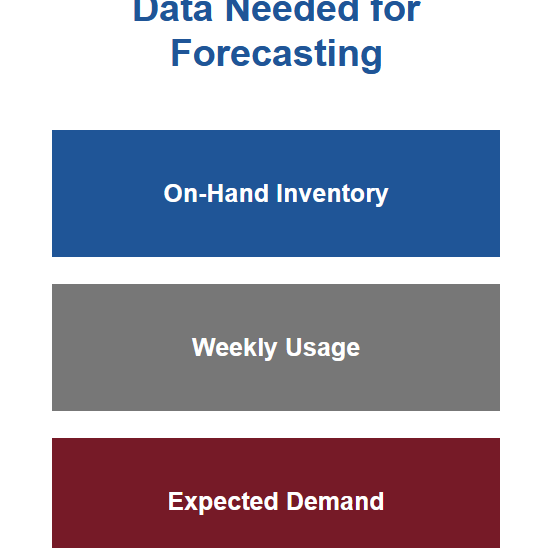
Forecasting becomes reliable when three types of inventory data work together:
1. Current On-Hand Inventory
What you have right now, by category, by unit, and by storage area.
2. Historical Usage Trends
How much product you use each week — pulled from:
-
Sales
-
Recipes
-
Prep batches
-
Inventory Out logs
3. Expected Demand
Upcoming needs based on:
-
Menu patterns
-
Seasonal volume
-
Day-of-week trends
-
Special events
-
Catering orders
Together, these data points show exactly what you’ll need to order next.
How to Use Inventory Data to Forecast Orders
Here’s the step-by-step forecasting workflow:
1. Start With Your Actual On-Hand Counts
Accurate counts give you the baseline for forecasting.
2. Compare Against Average Weekly Usage
If you use 18 lbs of chicken each week and currently have 6 lbs:
18 lbs needed – 6 lbs on hand = 12 lbs to order
3. Layer in Known Events or Volume Changes
Increase projected need if you have:
-
Holiday weekends
-
Banquets
-
Sporting events
-
Seasonal spikes
-
Promotions
4. Adjust for Vendor Pricing Trends
Use real-time vendor pricing to guide:
-
When to stock up
-
When to buy minimally
-
When to compare vendors before ordering
5. Finalize Your Forecasted Purchase List
The result is a data-driven order guide that accounts for:
-
Usage
-
Seasonality
-
Current stock
-
Event needs
-
Vendor pricing
This reduces surprises and keeps your operation fully prepared.
The NxtEdge Advantage
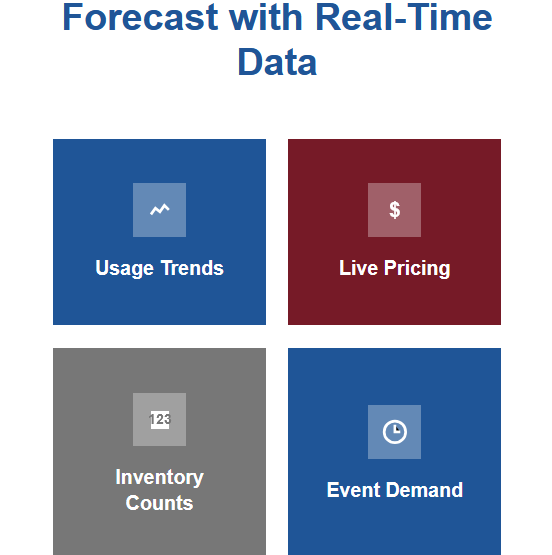
NxtEdge makes forecasting simple by connecting:
-
Real-time inventory counts
-
Historical usage data
-
Live vendor price comparison
-
Recipe-level demand
-
Multi-location trends
-
Event and catering inputs
With automation, operators get smart purchase recommendations based on actual data, not assumptions.
Key Takeaways
-
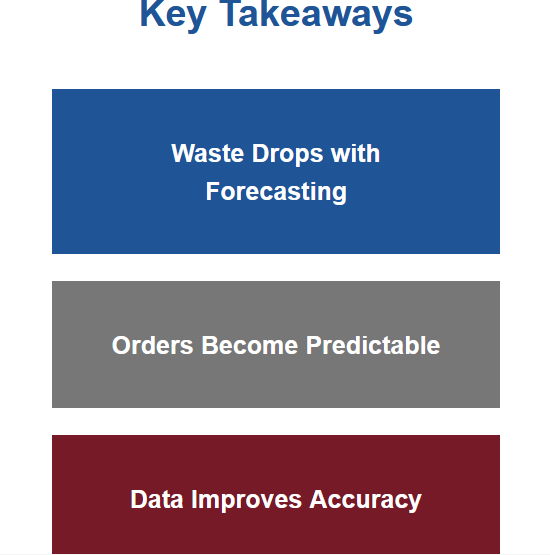
Forecasting prevents costly over-ordering and out-of-stocks.
-
Inventory data — counts, usage, demand — makes forecasting accurate and predictable.
-
NxtEdge automates forecasting using real-time inputs from across your operation.
Smart ordering starts with accurate inventory. Request your demo at NxtEdge.com.