

February 27, 2026
Learn How to Build a Smarter Order Guide That Protects Your Budget
One of the most common reasons restaurants overspend is simple: purchasing decisions aren’t aligned with projected sales.
When orders are placed without factoring in expected revenue, teams either over-order and create waste — or under-order and trigger emergency purchases. Both scenarios hurt margins.
Sales forecasts should guide purchasing. Without that connection, budgeting becomes reactive instead of strategic.
Why Most Order Guides Fail
An order guide should protect your margins — not create blind spots.
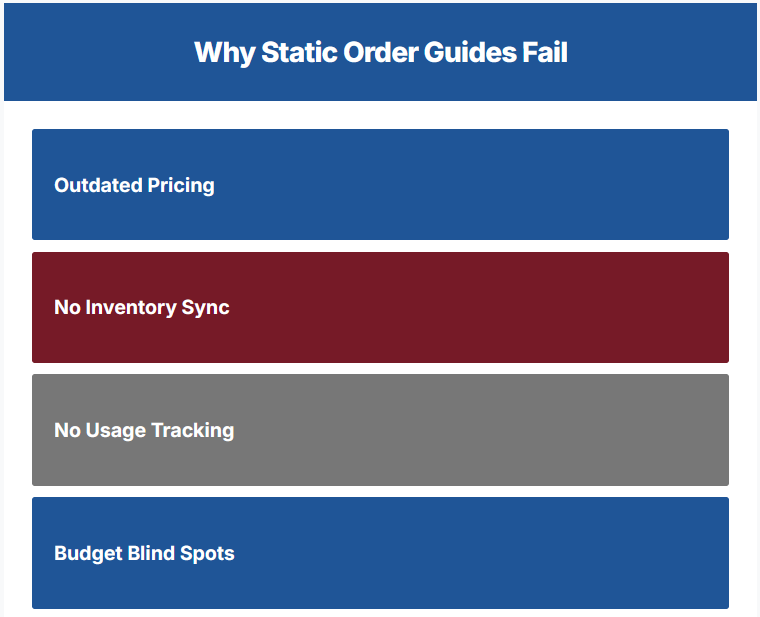
Yet in many restaurants and clubs, order guides are outdated spreadsheets or static vendor templates that don’t reflect real usage, current pricing, or changing demand. Managers follow them mechanically, assuming they’re accurate, even when costs and inventory levels have shifted.
When order guides aren’t dynamic, they contribute to:
- Over-ordering
- Duplicate purchases
- Missed vendor price increases
- Budget overruns
- Waste and spoilage
A smarter order guide is built on live data, not memory.
What a Smart Order Guide Includes
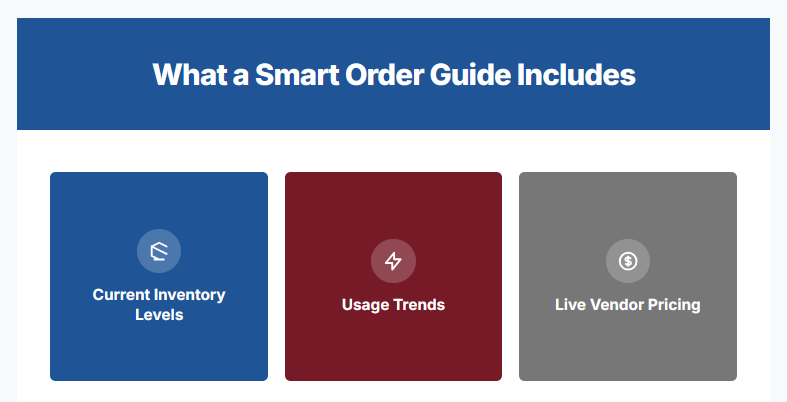
A strong order guide should reflect three real-time inputs:
1. Current Inventory Levels
If the guide doesn’t adjust based on what’s already on hand, you’ll consistently over-purchase.
2. Usage Trends
Historical weekly usage helps determine realistic par levels.
3. Live Vendor Pricing
Without price visibility, managers can’t adjust quantities or vendors when costs shift.
When these factors are connected, ordering becomes intentional instead of reactive.
The Difference Between Static and Dynamic Ordering
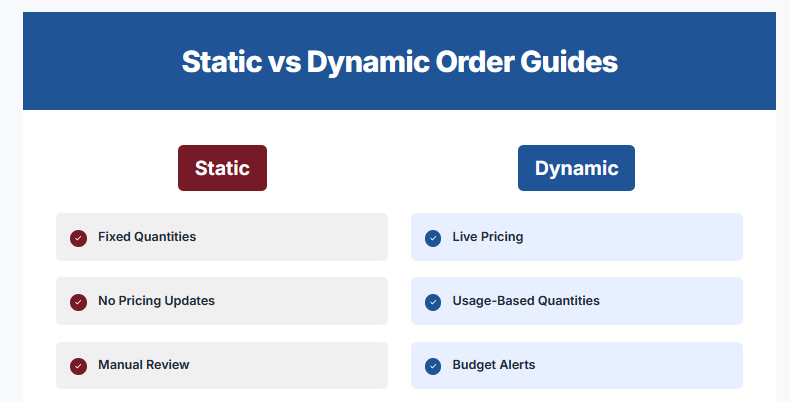
A static order guide assumes nothing changes.
A dynamic order guide adapts to:
- Vendor price fluctuations
- Event schedules
- Sales forecasts
- Inventory variances
- Category budget limits
Dynamic guides give operators flexibility while still maintaining discipline.
How Smarter Order Guides Protect Your Budget
When your order guide updates based on real data:
- Managers order closer to actual need
- Budget overruns decrease
- Vendor price changes are visible before ordering
- Category-level spend remains controlled
- Waste is reduced
Instead of reviewing overspending at month-end, you prevent it at the point of decision.
Key Takeaways
- Static order guides contribute to overspending and waste.
- Smart order guides are built on inventory, usage, and pricing data.
- Dynamic ordering protects margins and strengthens budget discipline.
- NxtEdge connects vendor pricing, inventory, and budgeting into one workflow.
Upgrade your purchasing process. Request your demo at NxtEdge.com.