

February 24, 2026
Learn How to Align Purchasing With Sales Forecasts
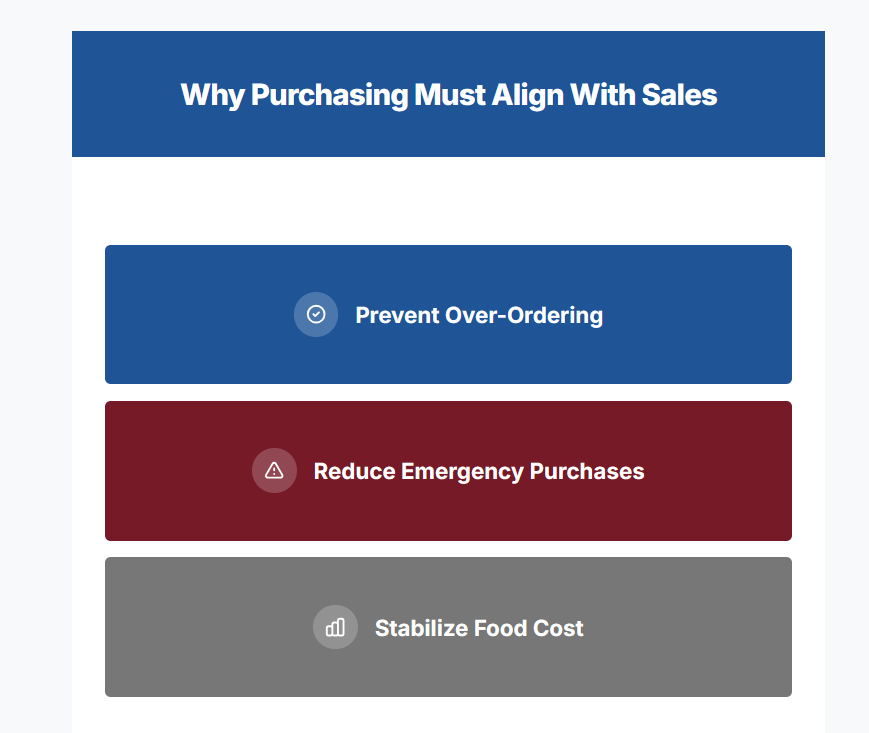
One of the most common reasons restaurants overspend is simple: purchasing decisions aren’t aligned with projected sales.
When orders are placed without factoring in expected revenue, teams either over-order and create waste — or under-order and trigger emergency purchases. Both scenarios hurt margins.
Sales forecasts should guide purchasing. Without that connection, budgeting becomes reactive instead of strategic.
The Risk of Ordering Without a Sales Forecast
When sales projections aren’t considered:
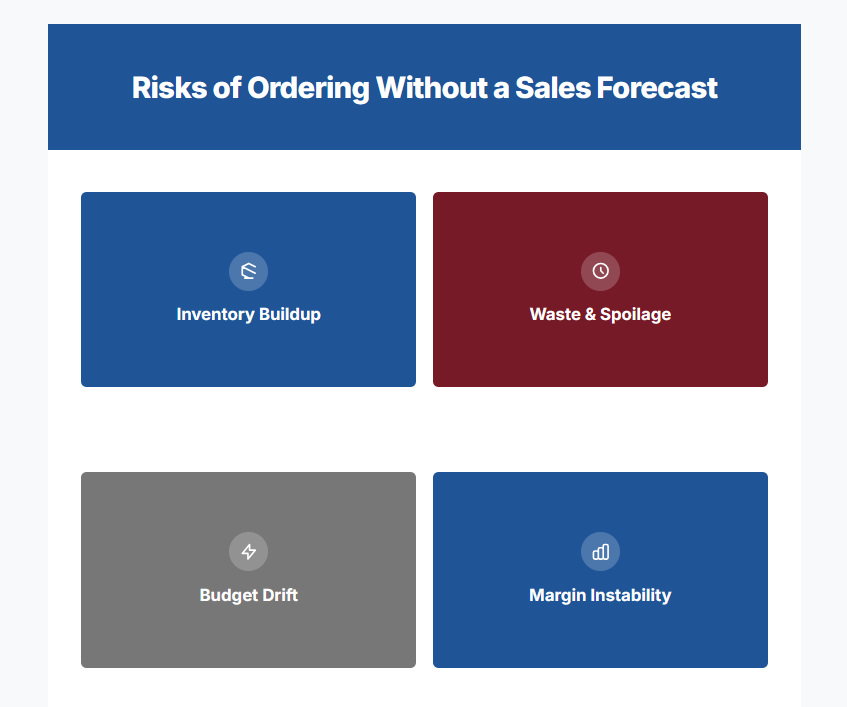
- Inventory builds up unnecessarily
- Cash flow tightens due to excess purchasing
- Food cost percentage becomes unstable
- Emergency orders increase
- Waste and spoilage rise
For multi-unit operators, these inconsistencies multiply quickly across locations.
Budget ordering only works when purchasing is grounded in expected demand.
What a Forecast-Based Purchasing Process Looks Like
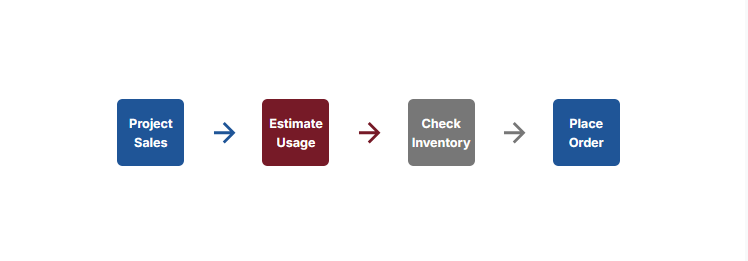
Aligning purchasing with sales requires three structured steps:
1. Project Weekly Sales
Use historical data, seasonality, promotions, and event bookings to estimate revenue.
2. Translate Sales Into Usage
Understand how projected sales volume impacts key categories such as proteins, produce, and bar.
3. Compare Usage Against On-Hand Inventory
Before ordering, confirm what’s already available to prevent duplication.
When these three inputs are connected, purchasing becomes predictable.
Why Category-Level Forecasting Matters
Not every category moves at the same rate.
For example:
- Protein demand may increase during event-heavy weeks
- Produce may fluctuate with menu specials
- Bar consumption often shifts with seasonality
- Dairy and dry goods may remain stable
Breaking forecasts into categories allows operators to protect their budget without cutting necessary items.
How NxtEdge Connects Forecasting to Budget Ordering
NxtEdge bridges the gap between sales projections and purchasing decisions by providing:
- Usage trend visibility by category
- Real-time inventory levels
- Vendor price comparison before ordering
- Budget tracking during order creation
- Alerts when projected orders exceed forecast-based targets
Instead of ordering based on instinct, managers use real operational data.
This creates stability in both food cost and cash flow.
Key Takeaways
- Purchasing without sales forecasting leads to waste and overspending
- Aligning projected revenue with usage data improves accuracy
- Category-level forecasting strengthens budget control
NxtEdge connects forecasting, inventory, and purchasing into one workflow
Bring discipline to your purchasing process. Request your demo at NxtEdge.com.