
February 5, 2026
Learn How Category-Level Budgets Improve Purchasing Control
Most restaurants don’t overspend because of one bad order — they overspend because purchasing lacks structure. When teams focus only on total food spend, it becomes impossible to see where costs are drifting.
Proteins, produce, dairy, dry goods, bar, and disposables all behave differently. Each category has its own volatility, vendor dynamics, and margin impact. Without category-level budgets, operators lose visibility into where money is actually going.
Category budgeting creates guardrails. It allows teams to spend intentionally, identify problems faster, and protect margins without slowing down operations.
The Problem with One Big Food Budget
A single food budget hides risk.
When everything rolls up into one number:
Protein overruns get masked by produce savings
Bar cost spikes go unnoticed until month-end
Emergency purchases distort category spend
Managers don’t know which decisions caused the issue
Showing teams only a total budget removes accountability and makes corrective action difficult.
Category-level budgets fix that.
What Category-Level Budgeting Looks Like in Practice
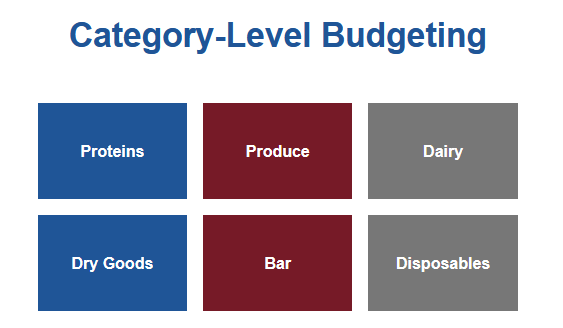
Instead of one food number, operators define spending targets by category:
Proteins
Produce
Dairy
Dry goods
Bar & beverage
Disposables
Each category has a planned spend based on:
Historical usage
Menu mix
Event volume
Seasonality
As orders are built, spend is tracked per category, not just in total.
This makes it immediately clear where purchasing is on track — and where it isn’t.
How Category Budgets Improve Ordering Decisions
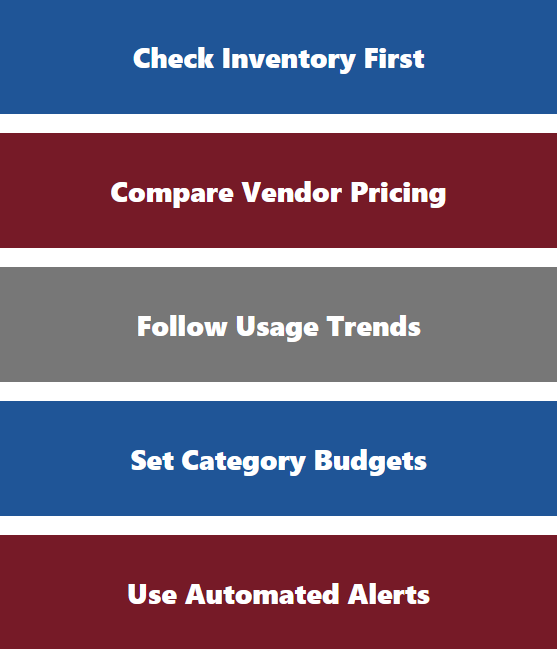
Category-level budgets help operators:
- Catch overspending early before it impacts the full budget
- Adjust orders in real time without cutting necessary items
- Identify vendor-driven cost increases by category
- Avoid overcorrecting by cutting the wrong products
- Train managers to order with intention, not instinct
Instead of reacting after the fact, teams make smarter decisions at the point of ordering.
How NxtEdge Supports Category-Based Budget Ordering
NxtEdge makes category budgeting practical — not theoretical.
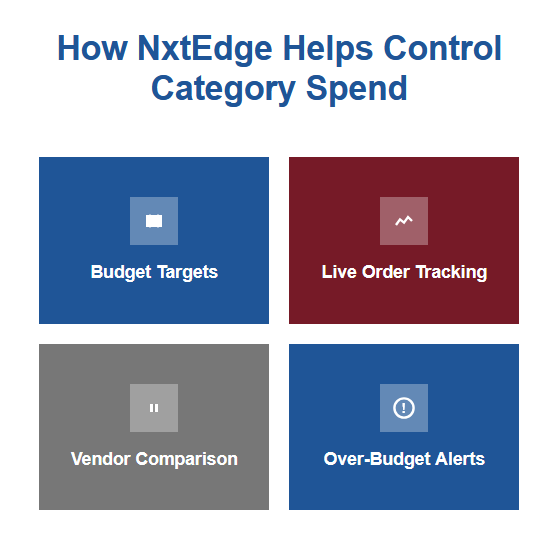
With NxtEdge, operators can:
- Assign budget targets by purchasing category
- Track spend as orders are built
- See remaining budget before submitting orders
- Compare vendor pricing within each category
- Flag orders that exceed category limits
- Review category performance over time
Budgets stop being static spreadsheets and become active decision tools.
Key Takeaways
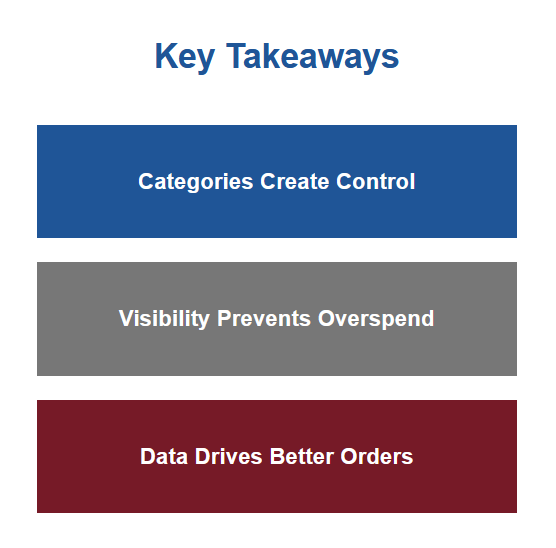
- One total food budget hides overspending
- Category-level budgets create clarity and accountability
- Operators can correct issues before costs spiral
- NxtEdge helps teams stay on budget without slowing down ordering
Bring structure to purchasing. Request your demo at NxtEdge.com.